
As urban populations grow, the demand intensifies for intelligent building solutions that enhance efficiency, sustainability, and the overall tenant experience. Artificial intelligence (AI) sits at the forefront of meeting these needs by optimizing building operations in revolutionary ways. In this article, we explore how AI is reshaping building management, the key benefits it delivers, real-world examples, and potential challenges ahead.

Overview: How AI Enables Smarter Building Operations
AI integrates directly into building management systems to analyse performance data, identify usage and equipment trends, and drive autonomous optimizations.
From a building’s design and construction to its ongoing operations and maintenance, AI systems learn continually from accumulated data patterns. They process this data to forecast potential issues, adapt usage profiles, and recommend optimizations tailored to the building. As the networks linking various equipment and devices converge more in smart buildings, AI delivers value by coordinating these integrated systems to raise efficiency.
Overall, AI unlocks substantial improvements in sustainability, cost savings, and the experiences of those occupying or managing smart buildings.
The Core Benefits Driving AI Adoption

Integrating AI capabilities into building management delivers numerous impactful benefits:
- Energy Optimization: AI continuously fine-tunes heating, cooling, lighting, and other systems based on granular occupancy data and weather forecasts. This prevents energy waste and unneeded costs.
- Proactive Maintenance: By processing signals from connected equipment, AI algorithms predict potential failures before they cause disruptions. This enables preventative maintenance for minimized downtimes.
- Frictionless User Experiences: Streamlining visitor entry, access control, lobby notifications, and other processes through AI massively improves building usability.
- Enhanced Sustainability: Optimized energy usage and emissions monitoring with AI contributes significantly to environmental and cost-saving goals.
Boosting Energy Efficiency – An AI Priority
From commercial real estate to smart homes, AI plays an integral role in maximizing energy efficiency through techniques such as:
- Flagging system inefficiencies and waste in real-time based on data patterns. This eliminates the need for manual energy audits.
- Adjusting usage of heating, cooling, lighting, and appliances based on predictive occupant and weather data.
- Supporting grid stability by intelligently managing renewable energy supply and demand.
- Overall, studies show AI reducing building energy usage by over 40% through identified optimizations.
Integrating Renewable Energy Sources
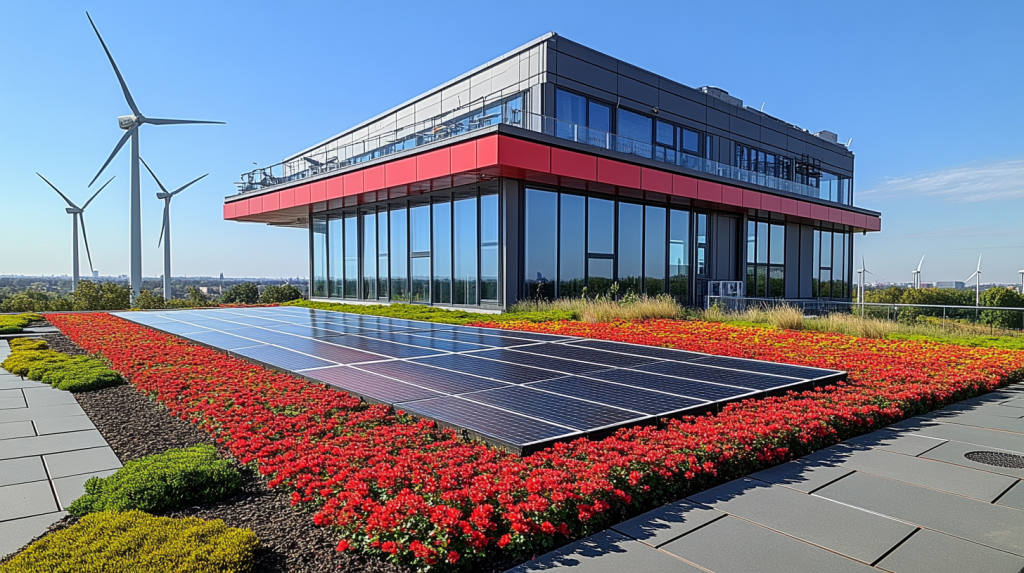
AI also expands the integration of renewable energy:
- Forecasting solar, wind, and other renewable output allows buildings to optimize storage and consumption.
- Monitoring energy supply and demand support optimal integration of renewable sources into a building’s power.
- Enabling automated interaction with smart grids based on demand response data. This increases renewable energy usage stability.
- Through features like real-time usage adjustments aligned with occupancy and climate conditions, AI maximizes efficient renewable energy deployment.
Overcoming AI Implementation Challenges
While promising, leveraging AI in building management raises multiple challenges:
- Integrating AI solutions with legacy building systems can require complex compatibility mappings.
- Collecting and securing the data volumes required for AI analysis demands rigorous privacy and security controls.
- Upgrading to AI technologies represents a significant initial cost outlay for many real estate owners.
- Operating AI environments necessitate specialized machine learning skills which remain scarce across industries.
- As regulations evolve, ensuring lawful and ethical AI usage standards requires vigilant governance.
Still, organizations like CIM and Bosch demonstrate through their AI building implementations that the long-term benefits make the investments worthwhile.
The Road Ahead – Continued AI Innovation
AI promises to keep revolutionizing areas like predictive maintenance, energy optimization, and the tenant experience as buildings get smarter. While aspects such as data privacy, integration complexity, and costs require ongoing attention, the field continues advancing through dedicated research and cross-industry collaboration.
Conclusion
AI’s transformative potential for efficient, sustainable building management is already being demonstrated but remains in early stages. As technology progresses and AI sees broader adoption, its facility operations advantages seem certain to multiply. Smart urban centres stand to gain tremendously from AI capabilities, helping improve liveability as populations grow.
With rigorous data governance, stakeholder alignment, and continued AI innovation, the future looks undoubtedly bright for AI-enabled building management solutions on the road ahead.


 Energetic Dialogues