
Urban areas are responsible for an astonishing 65% of global energy consumption and 70% of human-caused carbon emissions. As we navigate the road ahead, cities bear a crucial responsibility to mitigate their environmental footprint. However, this challenge also presents a compelling opportunity. By integrating renewable energy sources into infrastructure and daily operations, urban environments can evolve into dynamic hubs of sustainability and innovation.
Imagine turning on a light powered by the swirling winds between skyscrapers or feeling the warmth of your office, generated by the Earth’s geothermal heat. These visions are no longer confined to the imagination—they are rapidly becoming reality as we enhance key systems such as buildings, transportation, and power grids.
Join us on a journey into the smart cities of tomorrow! We’ll delve into the technologies driving this transformation, explore real-world examples, and learn valuable lessons from pioneers across the globe. With collaboration, creativity, and forward-thinking policies, urban centers can thrive while preserving resources for future generations.
Which Renewable Sources Show Promise?
Several renewable energy technologies are particularly well-suited for urban environments, each offering unique advantages:

- Solar Energy
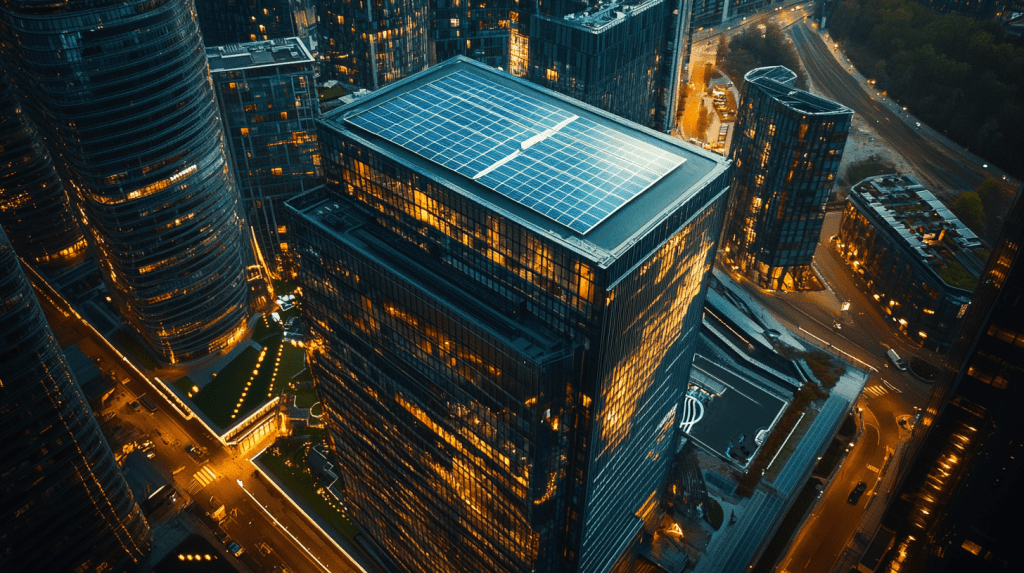
Urban landscapes, from wide rooftops to narrow alleyways, can harness solar power using solar panels and thermal collectors. In Barcelona, Spain, photovoltaics are not just limited to rooftops—they’re integrated into building facades, benches, and even bus stops. - Wind Energy
Wind turbines, strategically placed among skyscrapers, capture kinetic energy even in the densest urban environments. Vertical axis turbines, like those emerging in Toronto, Canada, efficiently use limited space and offer new possibilities for cities. - Hydro & Tidal Power
Coastal cities can leverage the movement of water as a reliable energy source, exemplified by Annapolis Royal in Nova Scotia, Canada, where tidal power contributes significantly to the energy grid. - Geothermal Energy
The Earth’s internal heat provides a stable energy source. Reykjavik, Iceland, is a prime example, where 90% of buildings are heated geothermally, showcasing the potential of this resource. - Waste-to-Energy
Urban waste holds untapped energy potential. In Oslo, Norway, biogas generated from food and sewage waste fuels city buses and taxis, turning waste management into a clean energy solution.

Weaving Renewables into Smart Cities
Incorporating renewable energy into cities is vital, but true impact depends on how well these energy sources integrate with other urban systems. For instance, Iceland’s abundant geothermal resources would be of little value without the networks needed to distribute that energy to homes and businesses. Similarly, waste-to-energy projects rely on efficient waste management systems to provide consistent fuel, and renewables depend on smart grids to manage energy flows seamlessly.
By interconnecting solar panels, wind turbines, and other renewable assets with transportation networks, power grids, buildings, and more, cities can create resilient and efficient ecosystems that are greater than the sum of their parts.
The Path to 100% Renewable – Spotlight on Three Pioneers
- Freiburg, Germany
Bathed in sunlight, Freiburg has embraced solar energy, integrating it across homes, businesses, and public spaces. These efforts, supplying 10% of local electricity needs, have significantly reduced both costs and carbon emissions. - Singapore
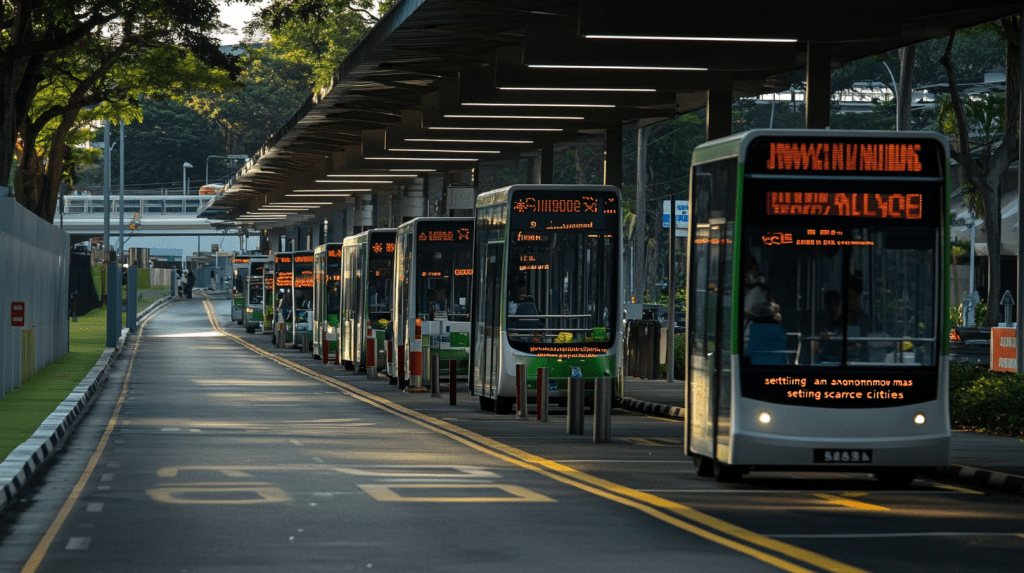
Despite relying heavily on imported fossil fuels, Singapore’s Smart Nation initiative promotes solar energy through innovative financing partnerships and integration with autonomous mass transit, setting an example for energy-scarce cities. - Copenhagen, Denmark
Copenhagen is on a transformative journey toward becoming a carbon-neutral city, supported by extensive cycling infrastructure, energy-efficient building designs, and renewable energy sources like wind and biomass. Impressively, 100% of the city’s public electricity, heating, and cooling comes from renewables.
Overcoming Challenges with Technology and Policy
Transitioning cities to renewable energy is not without its hurdles. High upfront costs can discourage investment, and generating sufficient energy often requires the aggregation of multiple intermittent sources like sunlight and wind.
Yet, these challenges drive innovation. Hybrid renewable systems balance supply across different sources, while district heating and cooling networks centralize production for greater efficiency. Battery storage systems retain surplus clean energy, ready for use during peak demand times. Moreover, new financing models help distribute costs and risks more equitably.
Policies are also crucial in this transition. For example, Germany’s legislation mandating utility companies to purchase renewable energy has spurred development, while China’s air pollution regulations have accelerated solar adoption.
Globally Proven Lessons to Chart Our Course
We aren’t starting from scratch. Cities worldwide have piloted innovative ideas, lighting the path forward. Government subsidies jumpstarted wind and solar industries in Denmark and Germany, while remote cities like Reykjavik and Ulaanbaatar have built affordable district heating systems using geothermal energy or waste fuels.
These examples demonstrate that secure, renewable urban energy is within reach if we leverage technology, policy, and collaboration to overcome the hurdles ahead.
Let’s Redefine What’s Possible
We stand at a crossroads today. One path leads to a future dominated by fossil fuels, burdened with pollution, resource scarcity, and instability.
But if we unite in our march toward renewable cities, the possibilities are limitless! Imagine skylines illuminated by solar glass, rooftops quietly generating wind energy, and carbon emissions plummeting as we advance, powered by nature’s inexhaustible elements rather than depleting resources.
With determination and vision, this future can start today—in our streets, buildings, and neighborhoods. The technologies are ready. Leaders are mobilizing. And people like you understand that renewable cities are the key to health, prosperity, and survival.
The climate crisis leaves us with no choice. The time for action is now. Let’s build smart cities powered by clean energy!


 Energetic Dialogues