
Envision traveling across Los Angeles in minutes, bypassing the city’s notorious traffic. This vision is becoming a reality, thanks to Advanced Air Mobility (AAM). Join us as we explore how Los Angeles is leading the way in this groundbreaking transportation revolution.
What is Advanced Air Mobility?
Advanced Air Mobility represents the next frontier in urban transportation, utilizing electric vertical takeoff and landing (eVTOL) aircraft to efficiently move people within cities. Imagine a combination of a helicopter and an electric car, but quieter and more environmentally friendly.
The benefits are substantial:
- Reduced Traffic Congestion: Faster travel times eliminate bottlenecks.
- Lower Carbon Emissions: Promoting a cleaner environment.
- Enhanced Urban Spaces: Less ground congestion leads to more green areas.
- Improved Emergency Response: Faster transportation options save lives.
However, AAM faces several challenges:
- Regulatory Complexities: Establishing new aviation rules.
- Infrastructure Development: Creating appropriate landing and charging facilities.
- Public Trust and Acceptance: Building community confidence in the technology.
- Noise Mitigation: Addressing concerns, despite eVTOLs being quieter than helicopters.
LA: The City of Angels Embraces eVTOLs
With its vast urban sprawl and traffic issues, Los Angeles is the ideal testing ground for AAM. The city is proactively shaping its implementation, not just waiting for the technology to arrive.

In 2020, Los Angeles partnered with the World Economic Forum to develop the “Principles of the Urban Sky,” setting the stage for responsible AAM development. The city then formed an AAM Partnership with clear objectives:
- Community Engagement: Keeping residents informed and involved.
- Industry Insight: Monitoring trends and policy developments.
- Policy Development: Crafting intelligent AAM policies.
In late 2022, Los Angeles released “Integrating Advanced Air Mobility: A Primer For Cities,” a comprehensive guide for urban planners globally, demonstrating LA’s commitment to innovation and collaboration.
The Technology Behind AAM
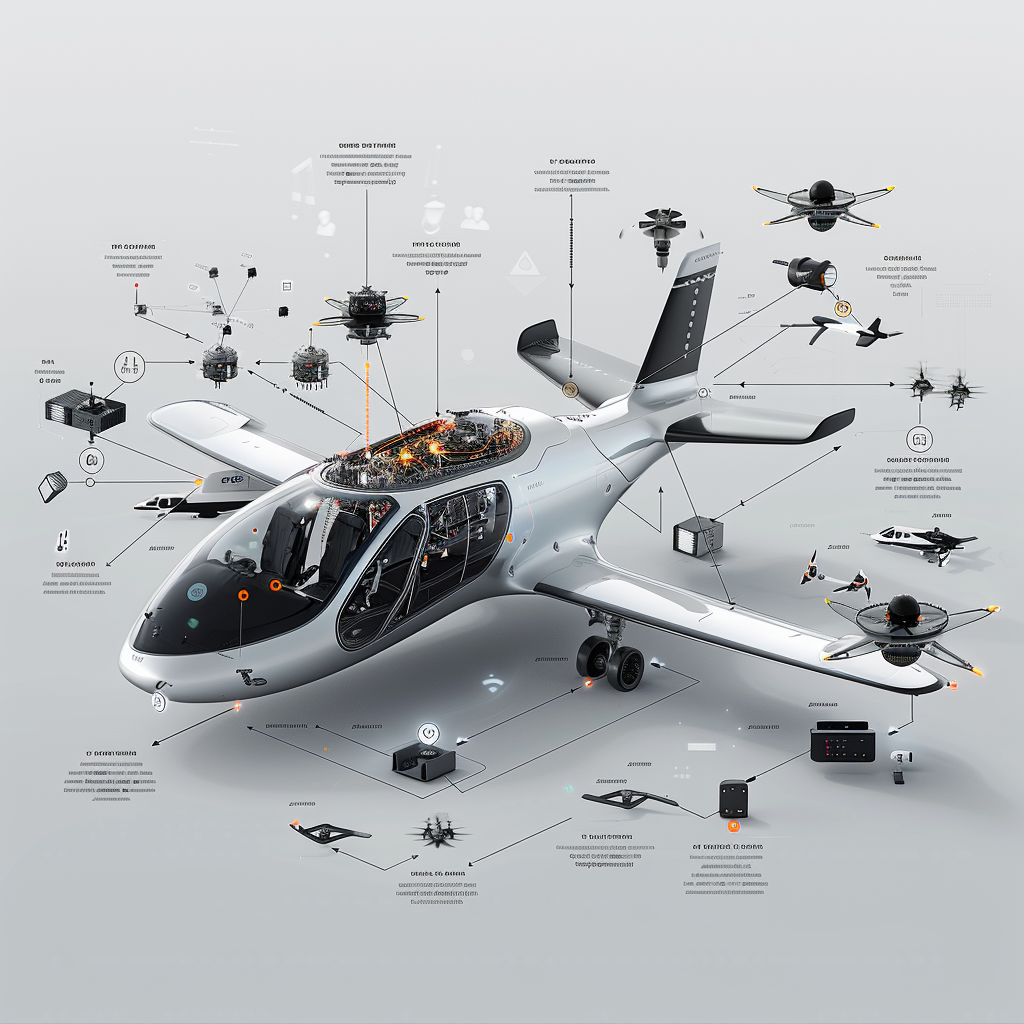
AAM involves advanced technologies beyond simply adding rotors to electric cars:
- Electric Propulsion: Utilizing electric motors and advanced power electronics for quieter, cleaner, and more reliable operations with reduced maintenance costs.
- Autonomous Systems: Featuring varying levels of autonomy, including advanced flight control systems, obstacle detection, and avoidance technologies, and even fully autonomous flight capabilities, enhancing safety and efficiency through sensors, AI, and machine learning.
- Advanced Materials: Using lightweight composites like carbon fiber reinforced polymers to offer high strength-to-weight ratios, improving performance and energy efficiency.
- Battery Technology: High-energy-density lithium-ion batteries are prevalent, but the industry is exploring solid-state batteries and other advanced energy storage solutions to increase range and reduce charging times.
- Distributed Electric Propulsion (DEP): This approach uses multiple small electric motors instead of a few large ones, providing redundancy, improved aerodynamics, and noise reduction.
Vertiports, the high-tech hubs for eVTOLs, are equipped with:
- Rapid charging stations.
- Advanced air traffic management systems.
- Passenger processing facilities.
- Maintenance and servicing areas.
These are the airports of the future, far beyond conventional helipads.
LA’s Innovative Approach
Los Angeles is addressing AAM challenges with forward-thinking strategies:
- Strategic Vertiport Siting: Identifying locations that integrate with existing transportation hubs, including ground-level and rooftop options, and considering the conversion of structures like parking garages into vertiports.
- Multimodal Connectivity: Enhancing connections between vertiports and existing public transit, ride-sharing services, and other transportation options, including dedicated lanes for electric shuttles and smart traffic management systems.
- Battery Energy Storage Systems (BESS): Implementing BESS at vertiports to manage peak demand and provide energy independence by storing energy from the grid or on-site renewable sources during off-peak hours and discharging it during high-demand periods.
- Renewable Energy Integration: Incorporating on-site renewable energy sources like solar panels and small wind turbines at vertiport locations to support sustainability goals and enhance energy resilience.
- Phased Implementation: Planning for early-stage operations (2025-2030) and more mature operations post-2030, allowing for gradual infrastructure development and time for public acceptance to grow.
- Urban Air Traffic Management (UATM): Developing a comprehensive UATM system that integrates with existing air traffic control, using AI and machine learning to optimize flight paths, manage vertiport capacity, and ensure safe separation between aircraft.
- Noise Monitoring and Mitigation: Implementing advanced noise monitoring systems and collaborating with eVTOL manufacturers to develop quieter aircraft designs, planning flight paths to minimize noise impact on residential areas.
- Community Engagement: Hosting regular town halls, workshops, and demonstrations to educate the public about AAM and gather feedback, and developing programs to ensure AAM benefits are distributed equitably across all communities.
The Future is Now (Almost)
While we are not yet at “The Jetsons” level, AAM is closer than you might think. The FAA is expected to certify the first eVTOL aircraft by 2025, with commercial operations soon to follow.
Imagine using an eVTOL to:
- Zip from LAX to downtown in minutes, avoiding rush hour.
- Quickly transport organs for emergency transplants.
- Conduct faster search and rescue operations in hard-to-reach areas.
- Provide aerial tours of the city (Hello, Hollywood sign!).
Los Angeles is paving the way for this exciting future, addressing challenges head-on and setting an example for cities worldwide. By tackling infrastructure needs, regulatory frameworks, and community concerns, LA is creating a blueprint for urban air mobility that balances innovation with sustainability and inclusivity.
As AAM technology continues to evolve, LA’s experiences will provide invaluable insights for urban planners and policymakers globally. The city’s proactive approach demonstrates a commitment to shaping the future of urban transportation, making it a beacon of progress in the realm of advanced air mobility.
So, the next time you’re stuck in LA traffic, look up. That whirring sound you hear might just be the future of urban transportation zooming overhead. Thanks to LA’s forward-thinking approach, that future might arrive sooner than you think. The sky is no longer the limit – it’s the new frontier of urban mobility!


 Energetic Dialogues