
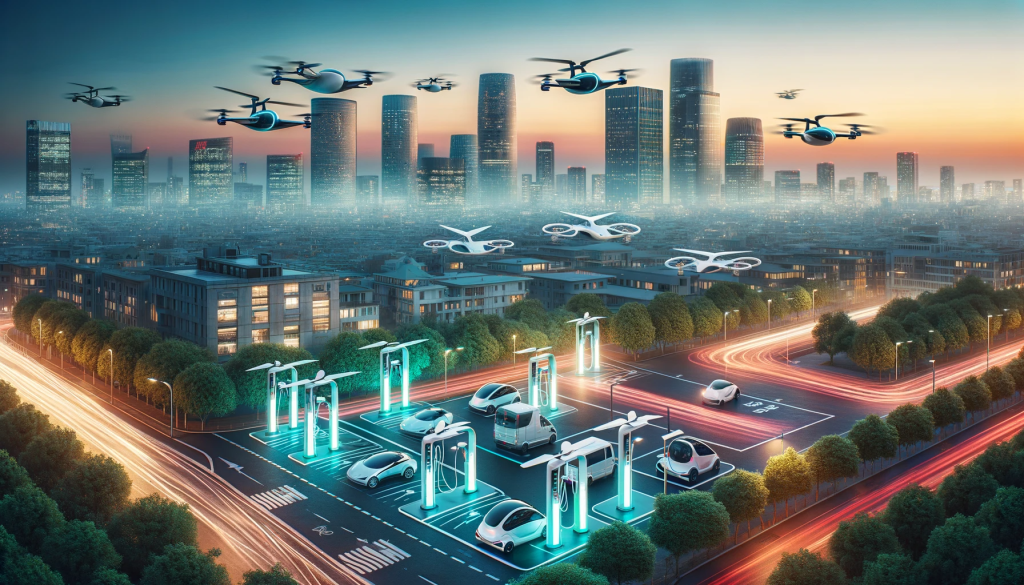
Welcome to the dawn of a new era in urban transportation, where Electric Vertical Take-Off and Landing (eVTOL) vehicles represent a leap towards more efficient and greener mobility. These innovative aircraft are set to transform cityscapes, promising to alleviate urban congestion and reduce dependence on fossil fuels. However, the real environmental benefit of eVTOLs hinges crucially on their energy sources. For these aerial vehicles to truly fulfil their eco-friendly promise, it’s essential that their charging infrastructure integrates with renewable energy sources like solar and wind power. This transition is vital in maintaining the environmental integrity of eVTOLs and fully recognising their potential in reshaping urban air mobility.
Introduction and the Green Energy Imperative for eVTOLs
Solar and Wind: The Dynamic Duo: Incorporating solar and wind energy into the eVTOL charging infrastructure offers a sustainable solution. Solar panels, from rooftop installations to concentrated photovoltaic (PV) systems, harness abundant solar energy. The PV systems, with their enhanced efficiency, are particularly beneficial in densely populated urban settings. Wind energy, harvested via turbines and offshore wind farms, provides a complementary renewable source, especially effective in coastal or windy areas.

Challenges and Solutions in Renewable Integration: While renewable energy presents a viable solution, its integration into eVTOL charging infrastructure isn’t without challenges. The primary concern is the variability of solar and wind energy. Advanced battery storage systems are crucial for managing this to ensure a reliable power supply for eVTOL charging. Upgrading urban grids to accommodate large-scale renewable integration is another essential consideration that will need to be taken into account.

Energy Storage: A Key Component: Having a high-capacity battery storage system plays a critical role in balancing the intermittency of renewable sources. By storing excess energy during peak production times, these systems ensure a steady and reliable supply for eVTOL charging, even when renewable sources aren’t actively generating power.

Leveraging Smart Grids and AI: Smart grid technologies and AI algorithms optimise the distribution and utilisation of renewable energy, aligning production with demand patterns. These intelligent systems are crucial in enhancing the resilience and efficiency of urban electrical infrastructure by seamlessly integrating distributed renewable energy resources.

Regulatory Support and Incentives Government policies and incentives play a pivotal role in promoting the use of renewable energy in eVTOL operations. Initiatives such as tax benefits, subsidies, and regulations mandating renewable energy use in transportation sectors are essential in fostering the growth of sustainable charging solutions.
Future Prospects and Innovations The prospect of integrating renewable energy into eVTOL charging infrastructure is replete with innovative possibilities. Anticipated advancements in solar panel efficiency, wind turbine technology, and energy storage are set to enhance the sustainability of eVTOL operations further. Emerging technologies like wireless or inductive charging, powered by renewable energy sources, could streamline the eVTOL charging process, offering a glimpse into a future where urban air mobility is both efficient and environmentally responsible.

In conclusion, the integration of renewable energy into eVTOL charging infrastructure is a cornerstone in realising the true environmental potential of urban air mobility. Despite the challenges, the path forward is being paved with continuous advancements in renewable energy technologies and reinforced by supportive government policies. This sustainable approach is vital for the rapidly growing eVTOL sector, promising a transformation in urban transportation. As these innovative aircraft take to our city skies, the adoption of renewable-powered charging stations becomes instrumental in fostering cleaner, more sustainable urban environments, ultimately making our cities not only more efficient but also greener and improving the quality of urban living.

 Energetic Dialogues