
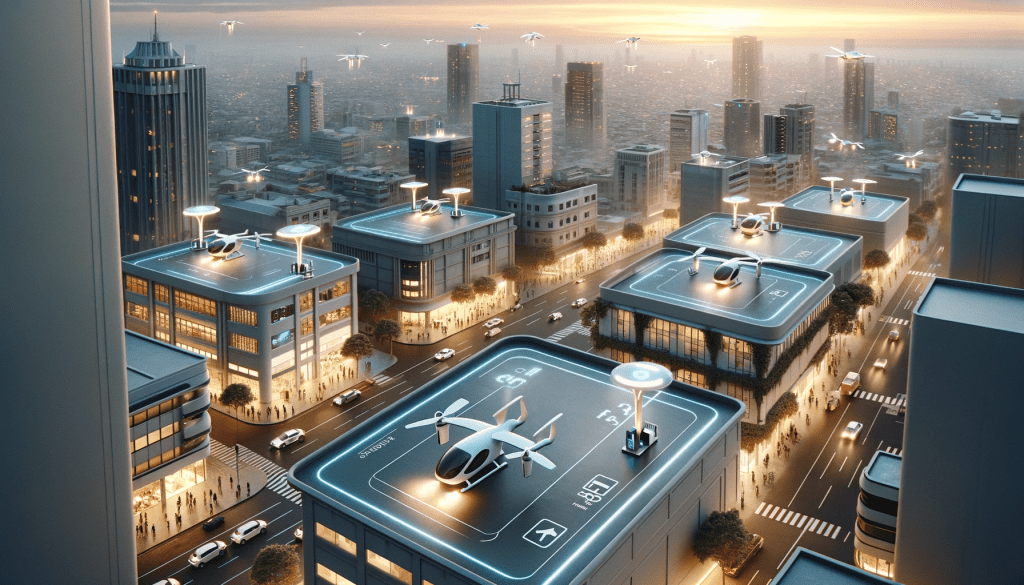
Welcome to a thrilling new chapter in urban transportation, where Electric Vertical Take-Off and Landing (eVTOL) aircraft are no longer just a concept but a reality taking to the skies and transforming our urban landscapes. Just as cities continually evolve and adapt, these advanced aircraft represent a significant advancement in transportation technology, offering a glimpse into a future where aerial mobility is commonplace. The development of specialized, high-powered charging stations is a crucial piece of this aerial puzzle, providing the essential infrastructure for eVTOL aircraft to operate efficiently. Join us as we explore the transformative potential of these futuristic vehicles and their innovative support systems, revolutionizing the way we think about moving around our urban environments.
Understanding eVTOL Power Needs: A Diverse Range of Requirements
eVTOLs, such as Beta’s Alia-250, exhibit a diverse range of power requirements, surpassing those of traditional electric vehicles. While standard EV chargers typically offer 50 to 150 kW, eVTOL stations cater to a broader spectrum, with some models demanding outputs as high as 350 kW. This substantial power need is crucial to support the rigorous demands of vertical takeoff and landing, necessitating rapid charging capabilities.

Blueprint for eVTOL Charging Stations: Striking a Balance Between Power and Efficiency
Creating eVTOL charging stations is a meticulous process that demands careful consideration of various factors, including:
- Catering to diverse power needs: Stations must deliver power at rates up to 350 kW to accommodate larger eVTOL battery packs, while also being adaptable to models with lower power requirements.
- Offering rapid charging capabilities: Efficient charging solutions are essential to fully power eVTOLs in under an hour. However, actual charging times may vary depending on the specific eVTOL model, battery size, and initial charge level.
- Developing universal connector standards: Ensuring compatibility across different eVTOL models is paramount. Universal connector standards will foster interoperability within the evolving eVTOL landscape.
- Integrating advanced technology: High-power connectors and intelligent charging protocols are key components of modern eVTOL charging stations. These technologies optimize energy transfer, enhance battery longevity, and protect against potential damage.
- Implementing sophisticated cooling systems: Managing heat generated during fast charging is crucial to safeguard batteries and charging equipment from overheating. Effective cooling systems are essential for maintaining the integrity of the charging infrastructure.

Integrating Charging Stations into Urban Infrastructure: Addressing Challenges and Seizing Opportunities
Incorporating these powerful charging stations into existing urban grids poses unique challenges, particularly in cities where grid upgrades may be necessary. Exploring renewable energy solutions like solar and wind power can create independent stations, aligning with eVTOL’s environmental goals. However, the feasibility and cost-effectiveness of such solutions are key considerations. Careful assessment of local conditions and technological advancements is essential for determining the most viable approach.

Navigating Development Challenges: A Collaborative Approach
To develop a robust eVTOL charging infrastructure, several challenges need addressing:
- Infrastructure Development: Building complex stations beyond standard EV chargers requires significant investment. Cost-effective solutions and innovative financing models are crucial to making eVTOL charging infrastructure more accessible and economically feasible.
- Regulatory Frameworks: Keeping pace with evolving regulations governing eVTOL charging infrastructure is vital for compliance and fostering a supportive regulatory environment. Close collaboration between industry stakeholders and government agencies is essential to ensure that regulations keep pace with technological advancements.
- Grid Integration: Smart charging strategies and demand response programs are essential to efficiently manage the increased load on electrical grids. Implementing these strategies can help mitigate potential disruptions and optimize grid utilization.
- Standardization: Establishing universal connectors and protocols ensures seamless charging experiences and interoperability across various eVTOL models and networks. Standardization will play a pivotal role in accelerating the adoption of eVTOL charging infrastructure.
- Safety Considerations: Prioritising comprehensive safety measures in station design and operation is paramount to ensure the well-being of users, the environment, and the surrounding infrastructure. Stringent safety protocols and regular maintenance procedures are essential for preventing accidents and minimizing risks.

Forging a Collaborative Future for Charging Infrastructure: Powering the Urban Air Mobility Revolution
Addressing these complexities requires collective efforts from government bodies, industry stakeholders, technology experts, and urban planners. Standardization is key to facilitating eVTOL charging infrastructure adoption while emerging technologies like wireless charging and smart energy management systems are expected to enhance operational efficiency and sustainability. Collaboration and innovation will be instrumental in shaping a future where eVTOL charging infrastructure is seamlessly integrated into urban landscapes, supporting the sustainable growth of urban air mobility.
Embracing the Future of Urban Mobility
The advent of eVTOL aircraft marks a turning point in urban mobility, necessitating innovative, efficient charging infrastructure. As the industry progresses, the need for groundbreaking charging solutions, regulatory harmony, infrastructural readiness, and stakeholder collaboration becomes increasingly critical. Developing eVTOL charging stations is a pivotal step toward shaping a sustainable and efficient urban air mobility future, with the potential to revolutionise our urban transit experience.

 Energetic Dialogues